Showing posts with label technology. Show all posts

Friday, May 01, 2009

Random Thoughts


היום שנים ועשרים יומים שהם שלשה שבועות ויום אחד לעמר
Today is the twenty-second day of the omer - three weeks and one day

חסד שבנצך
A day of loving kindness in a week of endurance


Some random thoughts on a rainy day......

From Maggie Anton to Aviva Zornberg to a great kick-off session of a newly formed Torah study group--I am filled with inspiration and great teachings. May I continue to process these new thoughts and insights and use them to move forward.

************************************

Although I realize that any translation will add it's own meaning to text, I'm finding that I prefer the Artscroll Tanach to the JPS versions. As I use it in study sessions, I find that it is closer to the Pshat (literal) level of study.

************************************

More support for my "the 21st century starts now" theory, courtesy of the LA Times:
Last big VHS supplier abandons the business

************************************

Reading Maggie Anton's Rashi's Daughters, Books 1 & 2, I'm learning that Talmud students of that time--11th/12th centuries--would memorize the text--Mishnah and Gemara--in order to be able to then discuss them. It makes sense, I'm sure written copies were few and not easily obtained. But in the jumble of my brain, this brought to mind Ray Bradbury's Fahrenheit 451, a novel set in a future time when books are being burned. A group of activists determined to save the words recruit people to memorize the books. Although I loved the theory of that solution, I never felt that mankind could pull it off, that we wouldn't be able to keep those writings alive. Little did I know, although with different motivation, in the Middle Ages there were people--dare I say "my people"-- who did just that.

Shabbat Shalom

Thursday, January 15, 2009

Shomer Scarf


I just finished my time as shomer for Rabbi Lew. Part of the Jewish burial ritual is to make sure that there is always someone sitting, watching over the body until the time of the funeral. It is important that the body not be left alone at this time. I see it as a way we can accompany our loved one in this last part of their journey on this earth. It gives us a way to honor someone, hold them close before we have to let go.

It is traditional to read Psalms during this time. We arranged for the shomerim in shifts, and many read Norman Fischer's "Opening to You," his interpretations of the Psalms. Norman is Rabbi Lew's closest friend--they traveled many of the life's paths together--the Iowa Writing program, the Zen Center, Makor Or. Norman was also a shomer, taking these last steps with Rabbi Lew.

I read Psalms, chanted Torah, shared some other writings. But mostly I just sat in silence-sometimes in meditation, sometimes having conversations with Rabbi Lew in my head. Because I had the overnight shift, 8P - 8A, there was lots of time. I also brought a skein of yarn and crocheted. I started a scarf--a pattern I have recently developed, something I can do without too much thinking. It's a spiral pattern, which felt appropriate as a spiritual metaphor for the teachings Rabbi Lew has given me. The scarf is crocheted lengthwise, and I chose to make it 108 stitches long. 108 is a spiritual number in many traditions. Eighteen is the number that represents chai, life, in Judaism. 108 is 6 X 18--Rabbi Lew had completed six decades of life, with the seventh unfinished. The Buddhists ring bells 108 for the New Year. It's also a sacred number to the Hindus. And it happens to be the number of stitches on a baseball--another spiritual pursuit of Rabbi Lew.

In the midst of the last row of the scarf, I ran out of yarn. Somehow, that seemed right. For loss of Rabbi Lew leaves many of us feeling incomplete. He left us far too soon; he had so much more to teach us. But we will continue the teachings he left us--in deed and in study. We will pass them on to the generations ahead. His life, like the scarf, may have been cut short before it's time, but his memory and his light will shine on for many years to come.

Zichrono Le'vracha

Friday, December 01, 2006

There's a reason for Google's success

We now take a brief blog time out to present this testimonial......

Little things in life make me happy. In this computer age, systems that work well--give me what I need and more--put a smile on my face.

I wanted to confirm the name of a specific type of beet for a recipe I'm sending out. I had no idea how the name was spelled, I only knew what I remembered of the name. I entered "chigia beets," my best transliteration of what I remembered, into Google search. The page I get asks, "Did you mean Chioggia Beets." And of course that's exactly what I meant. But I never would have gotten to that spelling without the help.

That's the kind of thing that was promised by the computer age and I have to say, those Google guys know how to deliver it.

We now return to our irregularly scheduled blog........

Monday, November 20, 2006

Editing and Music

There are musical genes passed along in my family. My grandfather was a musician by profession--first in Eastern Europe and then in the US. He played bass for Paul Whiteman and Emil Colman among others. My dad had a scholarship to the NY Philharmonic for timpani before World War II came around and disrupted things. He played drums professionally as a second job for many years.

I've always felt that those genes are evident in my makeup when I edit.I have an innate sense of pacing and timing for a piece--whatever that pacing and timing need to be.

Someone on one of my editing user group listserves feels the same link between music and editing. As an example, he pointed us to this video on YouTube, which I now share with you.

Wednesday, November 15, 2006

Corporate Propaganda Masquerading as News

The San Francisco Chronicle ran a story today about an FCC investigation into the use of corporate propaganda in local news stories. The concern is that stations use material from Video News Releases (VNRs) in news stories without letting the viewers know about the source of that footage.

Now, as one who has edited more than a few VNRs in her day, I know they are created exactly for that purpose. As the article states, a VNR is ". . . a prepackaged segment that looks and sounds like journalistically reported information but is produced by either a public relations firm or a government body with a vested interest in the product or service being described." Many of the VNRs I edited consisted of a complete cut story; a second version of the story with the "correspondent" voice over on a separate audio track so that it could be replaced with the local reporter's voice; and a selection of material that could be used in a piece created independently by the station.

If the stations use the latter and put in either an audio or video ID of the footage--no problem. I know I would want to know that some company has developed a new drug to combat breast cancer. But I would also want to know any downside of the new product, or that its release in general use is years away--information I'm not going to get in a corporate promotional piece. Unfortunately, I would venture to say that many times the piece gets aired as is--down to the script provided by the company. That is the danger.

The disturbing part of the article to me is that the FCC is just now getting to an investigation of this issue. VNRs masquerading as hard news have been around for at least 20 years. And while it still is an important issue to face, the opportunity for this disguised propaganda to be spread over the internet through various kinds outlets is more serious as the next generation gets most of their news from the web. I wonder how long it will take the government to address that aspect of this issue.

Thursday, November 09, 2006

A Note to Performers with Websites

As a visual editor, I know that when you make a demo reel to feature your work, you keep the samples as short as you can and get to the juicy stuff as soon as possible. This way you keep the interest of the viewers and hope that if they like what they see they will keep looking--even check out some other pieces you provide.

Today I've been doing some internet research, searching for some scholar-in-residence possibilities for Beth Sholom. One route I'm investigating is music, in the realms of scholarship, leadership and performance. As I look at the performer's websites, I certainly listen to the tracks provided to get a feel for the artist. And that's where I've run into a bit of frustration.

So to any vocal performers with websites reading this post--GET RID OF THE 30 SECOND INSTRUMENTAL INTRO ON YOUR 2 MINUTE (OR UNDER) SAMPLE TRACK!!!! I want to hear your voice as well as your song. I don't want to hear your instrumentation--I want to hear you and as much of your song as I can. One sample went so far as to end just as the singing began. THIS DOES NOT HELP ME GET A FEEL FOR WHO YOU ARE!!. And it certainly doesn't help you get a booking. If you don't want to rerecord the track, make a version that fades up before the voice starts. Please, coming from an editor and a possible client--take this advice to heart.

Okay, I feel better now.......back to our irregularly scheduled blog.

Thursday, October 19, 2006

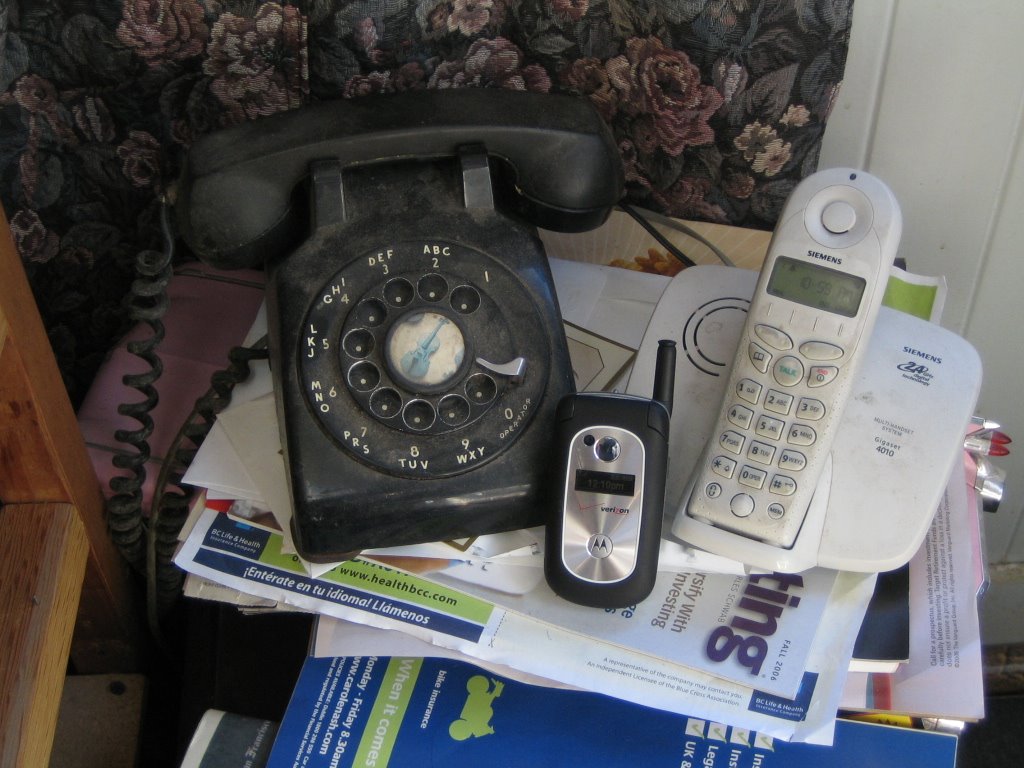
Telecommunication made easy

I'm old enough to remember a kitchen without a microwave oven, but I've always been able to reach anyone by phone. Granted, the first phone numbers I learned had letters in them--the phone number from most of my childhood was PY1-3567, which did become more commonly referred to as 791-3567. And yes, I had an area code--516. But this format remained the same as the years went by and my numbers changed.

Then numbers got longer. When you dialed out of your area code, you had to add a 1 before dialing the number. Of course, by then you weren't dialing you were pushing buttons. But all in all, not so radical a change.

Living with Ken means we make international calls more often--New Zealand, Australia, and the occasional England call. To make those calls, you have to add lots of numbers--country codes and city codes. Plus the Australians now have 8 digits in their numbers, not 7. Having to add all those numbers makes sense to me--after all, you'll connecting to a system half a world away. But yesterday, my phone world shrunk.

Ken is in New Zealand staying his parents while his sister takes some time off to go to a friend's wedding. He's alerted his clients that he will be away, but they still can get in touch with him by cell phone. The last time we were both in New Zealand using our respective phones and I needed to call him, I had to dial--actually, enter, we don't dial anymore-- lots of numbers from my cell to connect to his. Somehow I thought that's what his clients had to do. But last night when I wanted to see how his plane trip went, I just entered his normal 7-digit cell number. First I heard the normal US ring sound, then it switched to the more staccato New Zealand ring sound, and then Ken picked up. I made the call wondering if it would work, and was surprised when it did.

It's times like this I begin to realize the many years I've been around . . .

Friday, September 15, 2006

On the Road with the Pod

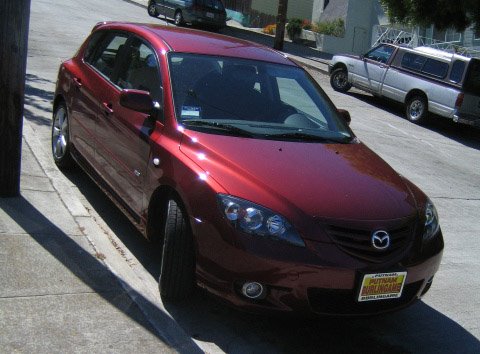
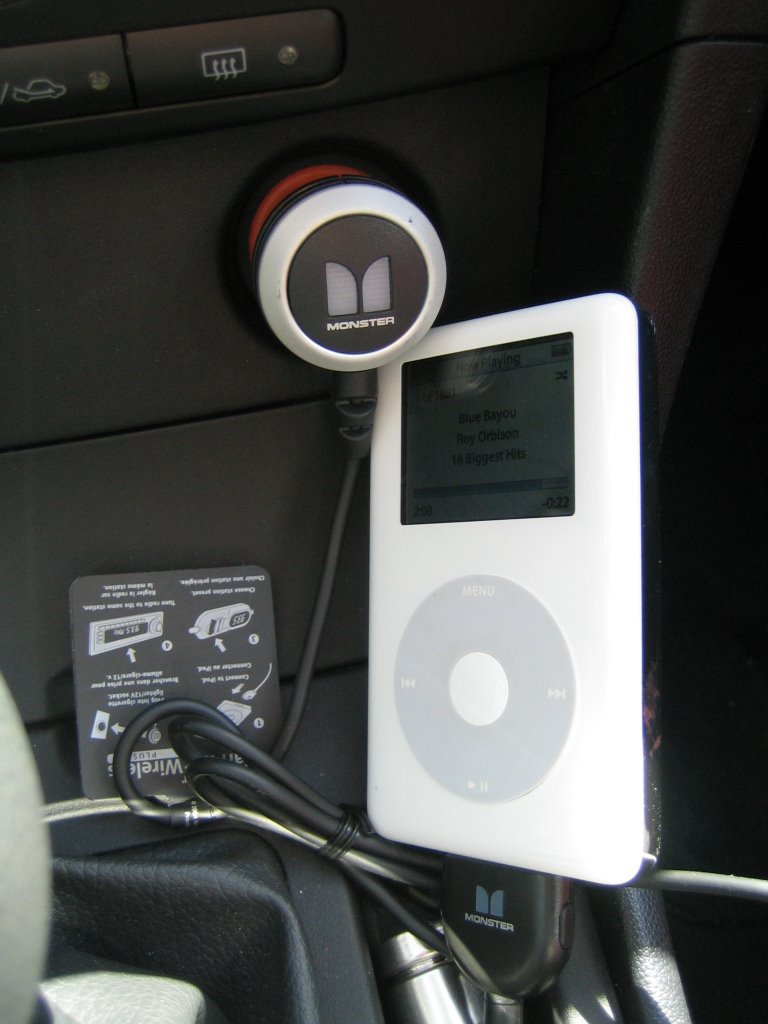
I really love my new car but it does have one drawback--there's no input for my iPod on the sound system. I read somewhere that Mazda will be adding that option in the 2007 models, but that doesn't help me now. In my Saab I used the cassette adapter, which worked great. The Mazda doesn't have cassette player, so I use the device that tunes the iPod into a blank FM station. In the Bay Area, with so many FM radio stations, I often have to deal with static. I didn't know how it would do on the road.

I am happy to report that it worked just fine, thank you very much. I first tried it when we hit Highway 5, and the station I found worked all the way up through California and over to the Oregon coast. I had to adjust the station at the coast, and once again as we circled Seattle. But that was about it. One nice added feature is that it charges while it plays, so there's no danger of running down the battery.

We didn't keep it on during the entire trip. We like to check out the radio stations in different regions, both AM and FM. We didn't travel that far, but you still get different perspectives in news and sports. That's especially true if you can find the independent stations. Everywhere you go you get the views of the right, the left, and the Christian evangelists. But it's hard to beat the Pod for music selection. I've downloaded enough of our CD collection to keep both Ken and me happy. Since Ken did most of the driving, I was able to do some discrete editing of the shuffle selections--skipping through some songs that I knew he wouldn't like or I didn't feel like hearing.

My next long road trip will be to LA at the end of October. I'll be by myself, so I'm glad to know that the Pod will be with me.